Singapore's COE Prices Are Wild Right Now — Here's a Smarter Way to Get Around
High COE? We got your back.
.jpg)
If you've glanced at the COE results lately, you know the feeling: a small flinch, followed by a mental recalculation of your five-year plan. In the second bidding exercise of August 2026, Category A premiums (for smaller cars) closed at $128,501, Category B (bigger cars) at $131,001, and the Open category — the one anyone can bid in — hit $135,000. Motorcycle COE alone is now over $11,000. That's before you've paid a single cent for the actual vehicle.
For a lot of Singaporeans, that's the moment car ownership stops being a lifestyle choice and starts being a financial decision nobody asked to make.
The real cost of "just owning a car"
COE is the headline number, but it's never the whole bill. Add depreciation, insurance, road tax, parking, servicing, and petrol, and a modest sedan can easily cost several hundred dollars a month before it's even left the driveway. And unlike a phone or a laptop, a car mostly just... sits there. Studies on urban vehicle usage consistently show private cars are parked for the vast majority of their life — an expensive asset working a fraction of the time.
When the entry price to even start that clock is north of $120,000 in COE alone, it's fair to ask: do you need to own a car, or do you just need a car when you need one?
A different way to get from A to B
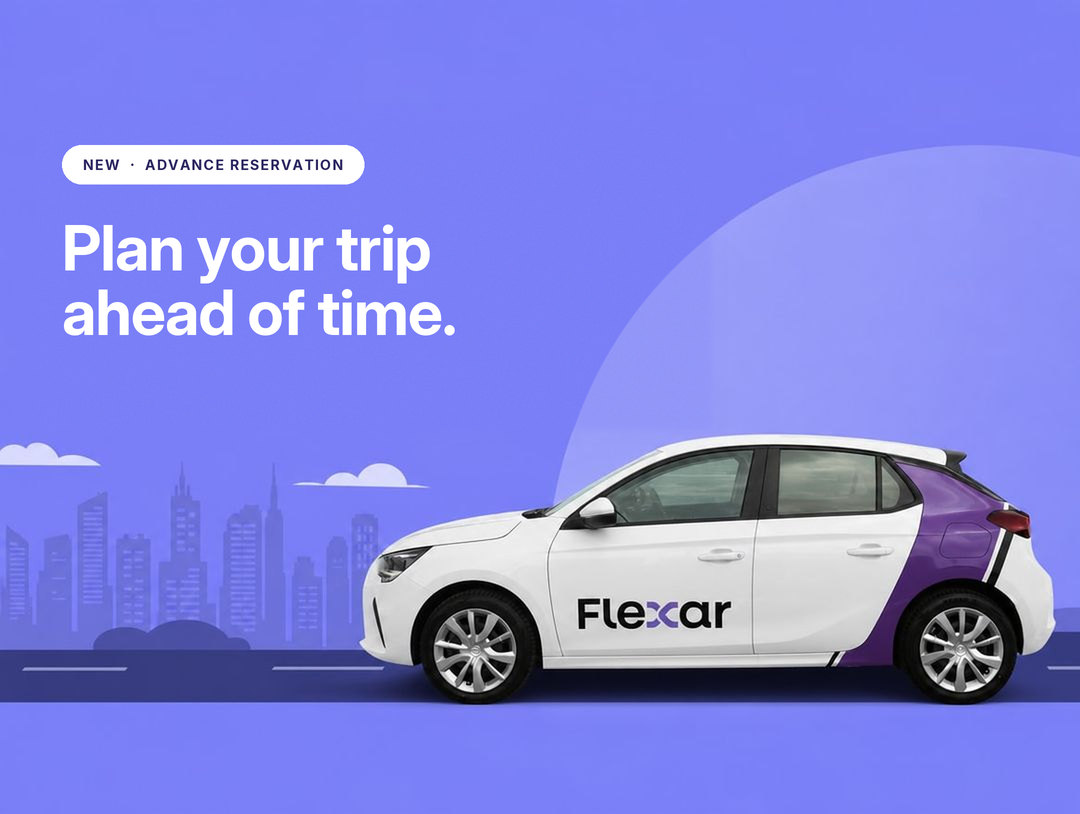
This is where car-sharing earns its keep — and where Flexar is built differently from the traditional "book it, drive it, bring it back to the same spot" model. Flexar is point-to-point: pick up a car near you, drop it off at your destination, and walk away. No circling back to return it, no round-trip tax on your time.
There's no deposit and no membership fee to get started — just free sign-up and instant verification. You pay for what you actually use: a tiered per-minute rate that gets cheaper the longer you drive, 5 minutes free on every trip, and 50 km of distance included before extra charges kick in. No COE bidding, no depreciation schedule, no insurance renewal to think about — that's already built into the price of the ride.
Ownership isn't the only way to have a car when you need one
None of this means car ownership is going away — some households genuinely need one every day. But for the errand-run, the airport drop-off, the once-a-week grocery haul, or the weekend trip that doesn't justify a six-figure commitment, paying for the trip instead of the asset is starting to make a lot more sense to a lot more people.
Curious what it'd cost you? Check real-time rates near you at flexar.com.sg and see what a car looks like when you're not stuck paying for it 24/7.